Artificial Intelligence and Future Careers in Cameroon: Opportunities, Skills, and Challenges
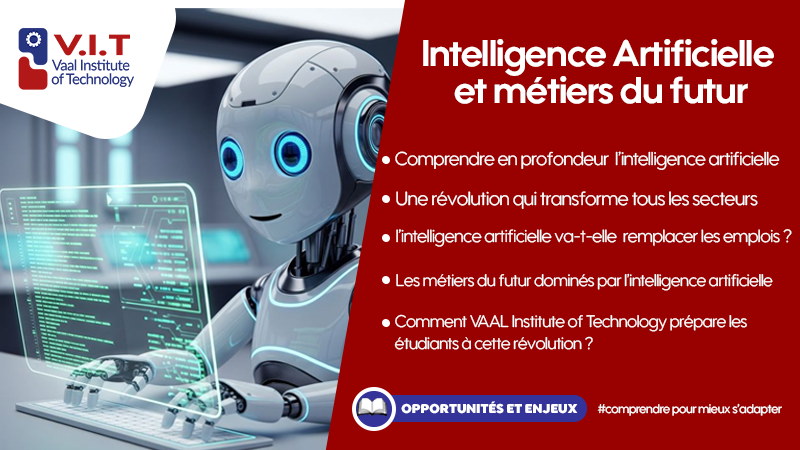
Artificial Intelligence and Future Careers: Understanding to Better Adapt
The global job market is undergoing one of the most profound transformations in modern history. Driven by rapid technological progress, digitalization, and automation, industries are evolving at a speed never seen before. At the center of this transformation stands Artificial Intelligence (AI), a disruptive technology that is redefining how businesses operate, how decisions are made, and how value is created.
Today, AI is no longer a distant innovation reserved for advanced economies. It is already integrated into everyday systems and professional environments across the world, including in Cameroon. From mobile applications and banking systems to healthcare services, education platforms, logistics, and even government services, AI is progressively shaping how society functions.
This evolution raises critical questions that millions of people are searching online every day:
- What is artificial intelligence and how does it work?
- How to learn artificial intelligence from scratch?
- What are the future jobs created by AI?
- Which careers will disappear due to automation?
- What are the benefits and risks of artificial intelligence?
- How to prepare for AI-driven careers in Cameroon?
Understanding artificial intelligence is therefore not just a technical curiosity. It is a strategic necessity for students, professionals, and anyone who wants to remain relevant in the future job market.
What is Artificial Intelligence? A Simple but Deep Understanding
Artificial Intelligence refers to the ability of machines and computer systems to simulate human intelligence. It is not limited to robots or futuristic machines, but includes a wide range of technologies that allow systems to learn, analyze, and make decisions.
In practical terms, AI systems are designed to:
- process massive amounts of data in seconds
- learn from previous experiences (machine learning)
- recognize patterns and predict behaviors
- automate repetitive and time-consuming tasks
- interact with humans through chatbots and assistants
- improve decision-making accuracy over time
What makes AI unique is its continuous learning capability. Unlike traditional software, AI systems improve automatically as they receive more data.
Artificial Intelligence as a Global Economic Revolution
Artificial intelligence is not just a technological evolution it is a full economic revolution that is transforming every major sector of activity.
In the financial sector, AI is used to detect fraud, manage risks, and automate transactions.
In healthcare, it supports medical diagnosis, patient monitoring, and treatment optimization.
In education, it enables personalized learning experiences adapted to each student.
In commerce, it helps businesses understand customer behavior and improve sales strategies.
In Cameroon, this transformation is still developing but is accelerating rapidly due to digital adoption and increasing investment in technology.
This revolution leads to several major changes:
- automation of repetitive tasks
- creation of new digital professions
- transformation of traditional jobs
- increase in global competition
- rising demand for technical skills
Students who understand these changes early are better positioned for future success.
Will Artificial Intelligence Replace Human Jobs?
One of the most debated and frequently searched questions in today’s digital era is: will artificial intelligence replace human jobs? With the rapid rise of automation, machine learning, and smart technologies, many students, professionals, and job seekers are concerned about the future of employment.
The reality, however, is far more nuanced and complex. Artificial intelligence is not simply eliminating jobs it is fundamentally transforming the nature of work, redefining roles, and reshaping entire industries.
Rather than a massive disappearance of employment, what we are witnessing is a shift in how work is performed, what skills are required, and which professions are becoming more relevant in the digital economy.
In most cases:
- repetitive, predictable, and manual tasks are increasingly automated
- certain traditional roles are gradually disappearing or being redefined
- new careers are emerging in fields like AI, data, and digital technologies
- existing professions are evolving with the integration of intelligent tools
For example:
- accountants now rely on automated financial systems, AI-based reporting tools, and real-time data analysis
- marketers use AI-driven analytics, customer behavior prediction tools, and automation platforms
- developers integrate artificial intelligence into coding, testing, and software optimization
- customer service agents work alongside chatbots and virtual assistants
- HR professionals use AI for recruitment, candidate screening, and performance analysis
This evolution is driven by several key technologies often searched online, such as:
- machine learning
- deep learning
- natural language processing (NLP)
- automation and robotics
- big data and predictive analytics
These technologies are not replacing humans entirely they are augmenting human capabilities, making work faster, more efficient, and more data-driven.
However, it is important to understand that not all jobs are equally affected.
Jobs Most at Risk of Automation
Roles that involve repetitive, routine, and predictable tasks are the most vulnerable to automation. These include:
- data entry clerks
- cashiers
- basic administrative roles
- assembly line workers
- telemarketing agents
These jobs are easier for AI systems to replicate because they follow structured processes.
Jobs Less Likely to Be Replaced by AI
On the other hand, jobs that require human intelligence, creativity, emotional understanding, and complex decision-making are much harder to automate.
These include:
- healthcare professionals
- educators and trainers
- entrepreneurs and business leaders
- engineers and IT specialists
- creative professionals (designers, content creators)
These roles rely on uniquely human abilities such as empathy, critical thinking, innovation, and adaptability.
The Rise of Hybrid Jobs
One of the most important trends in the future of work is the emergence of hybrid jobs, where humans work alongside artificial intelligence.
In these roles:
- AI handles data processing and repetitive tasks
- humans focus on strategy, creativity, and decision-making
This collaboration increases productivity and creates more value in organizations.
A Shift Toward Skills-Based Employment
The impact of artificial intelligence also means that the job market is shifting from degree-based hiring to skills-based hiring.
Employers now prioritize:
- practical digital skills
- problem-solving abilities
- adaptability to new technologies
- continuous learning
This is why many people search for:
- how to learn artificial intelligence
- skills needed for future jobs
- best careers in AI and technology
- jobs that will not be replaced by AI
The Real Challenge: Adaptation, Not Replacement
The real challenge is not that artificial intelligence will take all jobs, but that it will replace people who do not adapt with those who do.
To remain competitive, individuals must:
- learn digital and technological skills
- stay updated with industry trends
- develop both technical and soft skills
- embrace continuous learning
Emerging Careers in Artificial Intelligence and Digital Technology
Artificial intelligence is one of the biggest job creators of the modern era. It is generating highly specialized professions that require advanced technical and analytical skills.
Some of the most promising careers include:
Artificial Intelligence Engineer
Designs and develops intelligent systems capable of learning and decision-making.
Data Scientist / Data Analyst
Interprets complex data to help organizations make strategic decisions.
Cybersecurity Specialist
Protects digital infrastructures against cyberattacks and data breaches.
Automation and Robotics Engineer
Develops intelligent systems that automate industrial and business processes.
AI-driven Digital Marketing Specialist
Uses artificial intelligence to optimize advertising strategies and customer targeting.
These careers are increasingly in demand not only globally but also in Cameroon, where digital transformation is accelerating.
Essential Skills for the Future Job Market
In the era of artificial intelligence, success is no longer determined only by academic qualifications. It depends heavily on practical, digital, and cognitive skills.
The most important skills include:
- digital literacy and technological mastery
- critical and analytical thinking
- problem-solving ability
- adaptability to new technologies
- creativity and innovation
- communication and collaboration
- data interpretation skills
- continuous learning mindset
These skills are essential for navigating an increasingly automated and competitive job market.
Artificial Intelligence in Cameroon: Current Situation and Opportunities
In Cameroon, artificial intelligence is still in its early stages but is growing steadily. Many sectors are beginning to integrate digital solutions to improve efficiency and performance.
However, there is still a gap between available skills and market needs. This creates a strong opportunity for students and young professionals who choose to specialize in AI-related fields.
Key opportunity areas include:
- digital transformation in companies
- growth of tech startups
- increasing demand for IT professionals
- expansion of online services
- automation in public and private sectors
Students interested in career orientation can also explore:
- Which field to choose after high school in Cameroon
- Fields with the highest job opportunities in Cameroon
How to Learn Artificial Intelligence in Cameroon?
Learning AI requires a structured path that includes both theory and practical experience.
Recommended learning steps:
- understanding basic computer science concepts
- learning programming languages (Python, etc.)
- studying data analysis and statistics
- practicing machine learning projects
- working on real-world applications
Institutions that focus on practical training are more effective in preparing students for real AI careers. This is exactly the approach adopted by VAAL Institute of Technology in preparing students for AI and future jobs.
How VAAL Institute of Technology Prepares Students for AI and Future Jobs
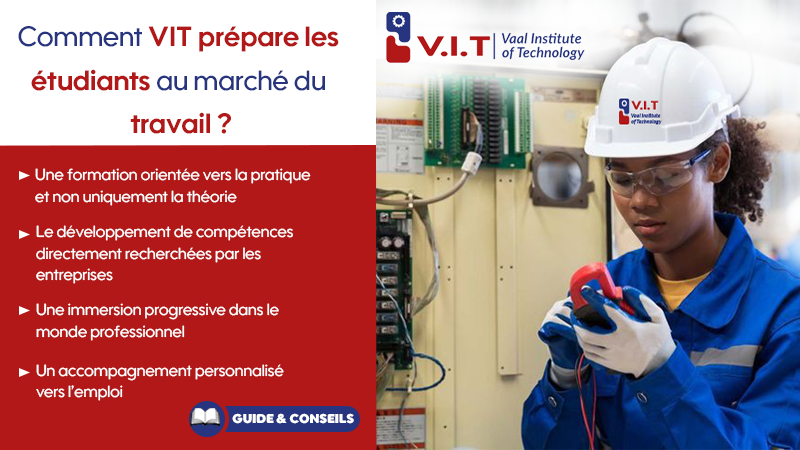
VAAL Institute of Technology plays an important role in preparing students for the digital and AI-driven economy.
Its training model is designed to bridge the gap between academic learning and professional requirements.
The approach includes:
- integration of digital and AI-related skills
- hands-on, project-based learning
- real-world simulations and case studies
- focus on employability and practical skills
- adaptation to emerging technologies and job trends
This allows students to gain both theoretical knowledge and practical experience, which is essential for future careers.
Learn more: Why choose VAAL Institute of Technology
Why Students Must Prepare Early for Artificial Intelligence Careers
One of the biggest mistakes students make is delaying preparation for future job market changes.
The digital economy rewards those who act early.
Preparing now allows students to:
- build high-demand technical skills
- access emerging career opportunities
- stay competitive in the job market
- increase employability chances
- secure long-term career stability
The future belongs to those who prepare today, not tomorrow.
Artificial Intelligence as a Career Opportunity, Not a Threat
Artificial intelligence is not just a technological revolution it is a transformation of the global workforce. While it changes traditional jobs, it also creates new opportunities for those who are ready to adapt.
Understanding AI, learning its tools, and developing the right skills are essential steps for building a successful future in Cameroon and beyond.
The question is no longer whether AI will impact your career but whether you are ready for it.
Ready to Shape Your Future?
The future belongs to those who embrace innovation, develop in-demand skills, and continuously adapt to change. At VAAL Institute of Technology (VIT), we are committed to preparing students for the opportunities created by artificial intelligence, digital transformation, and emerging technologies.
Whether you are looking to start your academic journey, upgrade your skills, or build a future-proof career, VIT provides the knowledge, practical experience, and industry-focused training you need to succeed.
Take the next step today
Explore Our Programs – Discover the courses designed for tomorrow’s careers.
Apply for Admission – Begin your journey toward a successful future.
Contact Us – Speak with our team and find the right program for your goals.
Your future starts now. Join VAAL Institute of Technology and become part of the next generation of innovators, leaders, and technology professionals.
The question is no longer whether AI will impact your career but whether you are ready for it.
Super Admin VIT
Author